
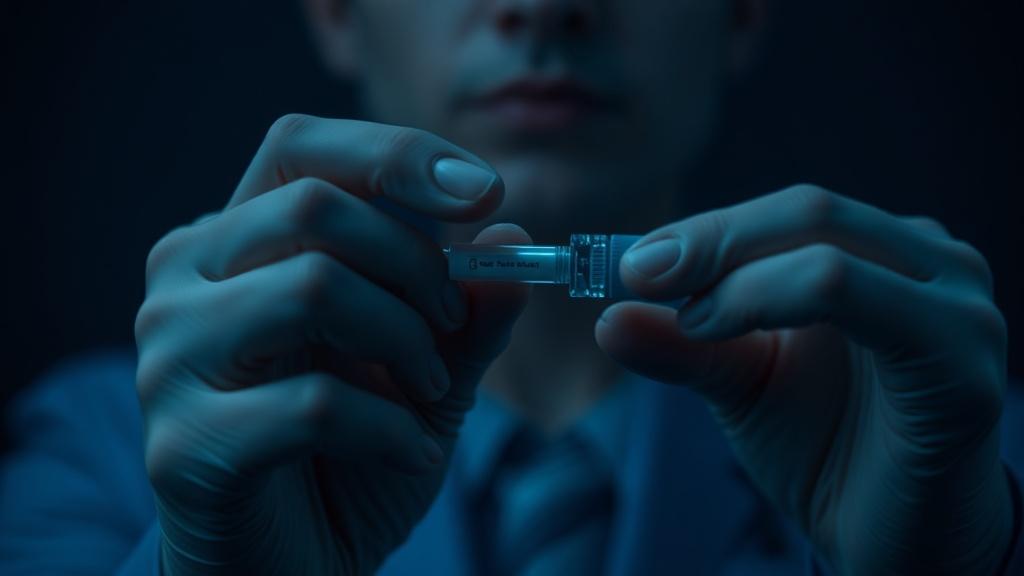

Complete guide to DOT oral fluid (saliva) drug testing. Covers DOT approval, procedures, advantages over urine testing, implementation timeline, lab requirements, and employer guidance.
Audio Summary
2:20
Listen: Oral Fluid Drug Testing Guide
Narrated by Sarah · Compliance Technology Specialist
0:00
2:20
Click play to load audio
Overview of Oral Fluid Testing
Oral fluid drug testing, also known as saliva testing, involves collecting a small sample of saliva from the donor's mouth using a specialized collection device. The specimen is then sent to a laboratory for analysis using the same drug classes tested in urine — marijuana (THC), cocaine, amphetamines, opioids, and PCP.
For decades, urine has been the only specimen type authorized for DOT drug testing. The addition of oral fluid as an approved specimen gives employers a second option that offers several practical advantages, particularly in terms of collection logistics, observed collection concerns, and detection of recent drug use.
It is important to note that oral fluid testing is an option, not a replacement. Employers can choose to use urine testing, oral fluid testing, or both, depending on their operational needs and the availability of certified laboratories and collection sites in their area.
DOT Approval and Background
The DOT finalized amendments to 49 CFR Part 40 authorizing oral fluid testing in 2023, with the rule taking effect in June 2023. However, the practical availability of oral fluid testing was dependent on the Department of Health and Human Services (HHS) establishing the Mandatory Guidelines for Federal Workplace Drug Testing Programs using Oral Fluid and on laboratories achieving certification under those guidelines.
SAMHSA (the Substance Abuse and Mental Health Services Administration, part of HHS) published the oral fluid mandatory guidelines, and the first laboratories began receiving certification for oral fluid testing in late 2024. With certified laboratories now operational, oral fluid testing is becoming a practical reality for DOT-regulated employers.
The authorization of oral fluid testing represents the most significant change to DOT drug testing procedures in decades. It reflects years of advocacy from industry groups, scientific research on saliva-based drug detection, and a recognition that a second specimen type provides important advantages for both employers and the testing process.
Collection Procedures
Oral fluid collection follows specific procedures outlined in Part 40, similar in structure to urine collection but with important differences.
Collection Process
- The collector verifies the donor's identity with a valid photo ID
- The donor is asked if they have consumed food, beverages, or tobacco in the preceding 10 minutes; if so, the collector waits
- The collector opens the oral fluid collection device in the donor's presence
- The donor places the collection device in their mouth and allows saliva to saturate the absorbent pad
- The collection is observed by the collector — this is standard for all oral fluid collections and is not considered a directly observed test
- The collector monitors the volume indicator on the device to ensure an adequate specimen is collected
- The specimen is sealed with tamper-evident labels in the donor's presence
- The Federal Oral Fluid Custody and Control Form is completed and signed
- The specimen is packaged and shipped to a SAMHSA-certified oral fluid laboratory
Split Specimen
Just as with urine testing, oral fluid collections include a split specimen. The collection device is designed to capture enough saliva for both a primary (Bottle A) and split (Bottle B) specimen. If the donor receives a verified positive result, they have the right to request testing of the split specimen at a different certified laboratory.
Advantages Over Urine Testing
Oral fluid testing offers several practical and scientific advantages compared to traditional urine testing:
Observed Collection Without Privacy Concerns
Every oral fluid collection is observed as a standard part of the process. This eliminates the privacy and dignity concerns associated with directly observed urine collections and significantly reduces the opportunity for specimen substitution or adulteration.
Detection of Recent Use
Oral fluid testing is better at detecting very recent drug use (within the past few hours) compared to urine. This makes it particularly valuable for reasonable suspicion and post-accident testing situations where identifying recent impairment is critical.
Harder to Cheat
Because the collection is observed and the specimen comes directly from the donor's mouth, oral fluid testing is much more resistant to cheating, substitution, and adulteration compared to urine testing. There is no opportunity for the donor to use synthetic specimens or adulterants.
Easier Collection Logistics
Oral fluid specimens can be collected virtually anywhere — at a job site, in a vehicle, or at any convenient location. There is no need for a restroom facility, temperature monitoring, or blue dye in toilets. This simplifies on-site and mobile collection significantly.
Gender-Neutral Collection
Because the collection does not involve removing clothing or providing a specimen in a restroom, there is no need for same-gender collectors or observers. Any trained collector can perform an oral fluid collection regardless of the donor's gender.
Limitations and Considerations
While oral fluid testing offers significant advantages, there are some limitations that employers should consider:
- Shorter detection window — Oral fluid picks up recent use, while urine picks up use from further back. DOT published its own comparison when it proposed oral fluid testing (87 FR 11156, February 28 2022), citing Cone and Huestis, Ann. N.Y. Acad. Sci. 2007, volume 1098, pages 51-103: marijuana up to 24 hours in oral fluid against 3-67 days in urine, cocaine 1-4 days against 1-5 days, amphetamines 1-3 days against 1-9 days, opioids 1-2 days against 2-4 days (87 FR 11156), read with the caveat DOT printed under it that a window depends on the dose, on regular heavy use and on the cutoff applied. The consequence to plan around is the one that matters: oral fluid is the stronger specimen for recent use and the weaker one for use further in the past.
- Limited laboratory availability — As a newer testing method, fewer SAMHSA-certified laboratories currently offer oral fluid testing compared to urine. This is expected to improve as more labs achieve certification.
- Dry mouth challenges — Some donors may have difficulty producing an adequate specimen due to medications, medical conditions, or nervousness. Part 40 includes procedures for handling insufficient specimen situations.
- No alcohol testing — Oral fluid collection is for drug testing only. Alcohol testing still requires an evidential breath testing device (EBT) or an approved alcohol screening device.
Implementation Timeline
The rollout of oral fluid testing has occurred in phases:
June 2023
DOT final rule amending Part 40 to authorize oral fluid testing took effect
2023-2024
HHS/SAMHSA developed and published mandatory guidelines for federal workplace oral fluid testing
Late 2024
First SAMHSA-certified oral fluid testing laboratories began accepting specimens
2025-2026
Continued expansion of certified laboratory capacity, collection device availability, and employer adoption
Laboratory Requirements
Only SAMHSA-certified laboratories may perform oral fluid drug testing for DOT purposes. The certification process for oral fluid testing is separate from urine testing certification, meaning a laboratory certified for urine testing is not automatically certified for oral fluid.
Certified oral fluid laboratories must meet rigorous quality standards including proficiency testing, quality assurance programs, and chain-of-custody procedures specific to oral fluid specimens. SAMHSA maintains a current list of certified laboratories on its website.
As more laboratories achieve oral fluid certification, the geographic availability and turnaround times for oral fluid testing will continue to improve. Employers considering oral fluid testing should verify that a certified laboratory is accessible in their region and can provide acceptable turnaround times for their program needs.
What Employers Should Know
If you are considering adding oral fluid testing to your DOT compliance program, here are the key steps:
- Update your written policy — Your drug and alcohol testing policy must be updated to reference oral fluid testing if you plan to use it. The policy should specify under what circumstances oral fluid will be used (all tests, specific test types, or at the employer's discretion).
- Notify employees — Employees must be notified of any changes to the testing program, including the addition of oral fluid as a specimen type.
- Verify laboratory access — Confirm that a SAMHSA-certified oral fluid laboratory is available and that your collection network can handle oral fluid specimens.
- Train collectors — Collectors who will perform oral fluid collections must be trained on the specific procedures for oral fluid specimen collection under Part 40.
- Work with your C/TPA — If you use a consortium or third-party administrator, coordinate with them to ensure oral fluid testing is integrated into your program logistics.
Frequently Asked Questions
Can I switch entirely from urine to oral fluid testing?
+
Yes, employers can choose to use oral fluid testing for all DOT drug tests, all urine testing, or a combination of both. The choice is the employer's (or C/TPA's) as long as a SAMHSA-certified oral fluid laboratory is being used and Part 40 collection procedures are followed. However, there are situations where urine may still be required — for example, if a SAMHSA-certified oral fluid lab is not available in your area.
Is oral fluid testing as accurate as urine testing?
+
Yes. Oral fluid testing performed by SAMHSA-certified laboratories using approved collection devices meets the same scientific and legal standards as urine testing. The cutoff levels are different because the drugs are present in saliva at different concentrations than in urine, but the tests are validated to be accurate and reliable for the purpose of DOT workplace drug testing.
Does oral fluid testing detect alcohol?
+
No. Oral fluid collection under Part 40 is for drug testing only. DOT alcohol testing must still be performed using an evidential breath testing (EBT) device for confirmation tests and either an EBT or an approved alcohol screening device (ASD) for initial screening tests. The alcohol testing process is unchanged by the introduction of oral fluid drug testing.
Ready to Add Oral Fluid Testing to Your Program?
ABW Compliance can help you evaluate whether oral fluid testing is right for your operation and integrate it seamlessly into your compliance program.
Get a Free Compliance AssessmentGet a Free Quote
Recent Posts
- Return-to-Duty Process: Complete Guide for Employers (2026)May 12, 2026
- Reasonable Suspicion Training: What Supervisors Need to Know (2026)May 12, 2026
- DOT Post-Accident Drug & Alcohol Testing: Employer Guide (2026)May 12, 2026
- DOT Compliance for Owner-Operators: Getting Started Guide (2026)May 12, 2026
- How Long Do Drugs Stay in Your System? Detection Windows for DOT TestingMay 12, 2026