
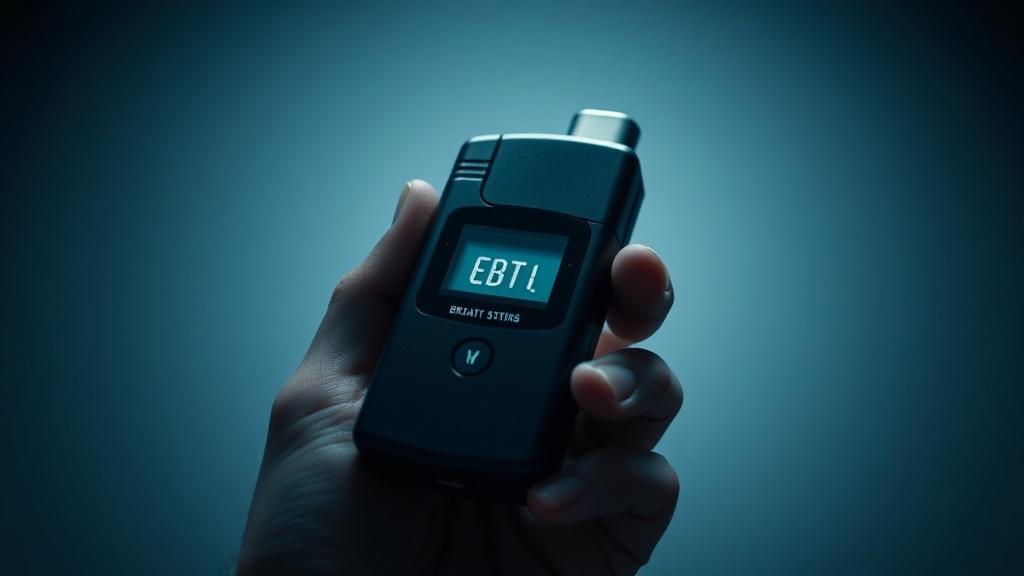

Complete guide to DOT alcohol testing including EBT devices, BAT qualifications, the two-step testing process, result thresholds, when testing is required, and STT vs BAT roles.
Audio Summary
2:30
Listen: DOT Alcohol Testing Guide
Narrated by Catherine · DOT Compliance Educator
0:00
2:30
Click play to load audio
How DOT Alcohol Testing Works
DOT alcohol testing is fundamentally different from DOT drug testing. While drug testing uses urine or oral fluid specimens analyzed at a laboratory, alcohol testing is conducted on-site using breath testing devices. The test measures breath alcohol concentration (BrAC), which correlates to blood alcohol concentration. Results are available immediately — there is no laboratory analysis or MRO review involved.
The DOT alcohol testing process uses a two-step approach: an initial screening test followed by a confirmation test if the screening result is 0.02 or greater. The screening test can be performed using either an Evidential Breath Testing (EBT) device or an approved Alcohol Screening Device (ASD), while the confirmation test must always use an EBT device that meets strict accuracy and documentation requirements.
It is important to understand that DOT alcohol testing does not use urine. While some non-DOT workplace programs include alcohol metabolites (such as EtG or EtS) in their urine drug panels, the DOT exclusively uses breath-based testing for alcohol. Urine, blood, and hair alcohol testing are not accepted under 49 CFR Part 40.
Evidential Breath Testing (EBT) Devices
An EBT is a precision instrument approved by the National Highway Traffic Safety Administration (NHTSA) for use in DOT alcohol testing. EBT devices must meet rigorous accuracy standards and produce printed results that can be attached to the DOT Alcohol Testing Form (ATF). Only devices that appear on the NHTSA Conforming Products List (CPL) may be used for DOT confirmation tests.
EBT devices work by measuring the amount of ethanol in a breath sample. The employee breathes into a mouthpiece, and the device analyzes the expired air using infrared spectroscopy, fuel cell technology, or another approved detection method. The result is displayed on the device screen and printed on a dated, time-stamped printout.
EBT devices must be calibrated according to the manufacturer's specifications and must undergo regular accuracy checks. Calibration records must be maintained and are subject to review during DOT audits. A test conducted on an improperly calibrated device can be invalidated.
BAT Qualifications & Training
A Breath Alcohol Technician (BAT) is the individual trained and qualified to conduct DOT alcohol confirmation tests using an EBT device. BATs must successfully complete a training course that includes instruction on Part 40 procedures, operation of the specific EBT device they will use, how to complete the DOT Alcohol Testing Form (ATF), and demonstrated proficiency in conducting tests.
BAT training must include hands-on practice with the EBT device and mock test administrations. The BAT must demonstrate competence in performing the air blank, administering the test, reading and recording results, and handling situations such as inadequate breath samples or equipment malfunctions. Only individuals who have completed this training may perform confirmation alcohol tests.
BATs are not required to be healthcare professionals — they can be employees of the collection site, TPA staff, or even employer personnel who have received the required training. However, an employer should not use a direct supervisor of the employee being tested as the BAT to avoid conflicts of interest.
The Two-Step Testing Process
DOT alcohol testing follows a mandatory two-step protocol designed to ensure accuracy and provide the employee with due process.
Step 1: Screening Test
The screening test is the initial test performed to determine whether the employee has any measurable alcohol in their system. This test can be conducted using either an EBT device or an approved Alcohol Screening Device (ASD), which may include saliva-based devices.
- The technician verifies the employee's identity with photo ID
- An air blank is performed on the EBT to ensure the device reads 0.00
- The employee provides a breath specimen into a new, sealed mouthpiece
- The result is recorded on the DOT Alcohol Testing Form
- If the result is less than 0.02, the test is complete and reported as a negative result
- If the result is 0.02 or greater, a confirmation test is required
Step 2: Confirmation Test
If the screening test result is 0.02 or greater, a confirmation test must be conducted using an EBT device (not an ASD). The confirmation test must occur at least 15 minutes but no more than 30 minutes after the screening test. This waiting period allows residual mouth alcohol from recent food, drink, or mouthwash to dissipate, which could otherwise produce a falsely elevated result.
- Must wait at least 15 minutes after the screening test
- Must be conducted within 30 minutes of the screening test
- Must use an EBT device (ASD not permitted for confirmation)
- A new air blank must be performed immediately before the confirmation test
- The employee must not eat, drink, smoke, or put anything in their mouth during the waiting period
- The confirmation test result is the final, reportable result
Result Thresholds & Consequences
DOT alcohol testing uses two critical threshold levels, each with different consequences:
0.02 - 0.039 BrAC: Not a DOT Violation, But Action Required
A confirmed breath alcohol concentration between 0.02 and 0.039 is not considered a positive test or a DOT violation. However, the employee must be immediately removed from safety-sensitive duties and cannot return until a waiting period has passed, which differs by agency. Under FMCSA rules a driver stays off until the start of the next regularly scheduled duty period, but not less than 24 hours after the test (49 CFR 382.505). Under FTA rules the employee stays off until a retest measures below 0.02, or until the next regularly scheduled duty period but not less than 8 hours after the test (49 CFR 655.35).
- Employee is removed from safety-sensitive duties for the period the agency rule sets (24 hours under 49 CFR 382.505; 8 hours or a retest below 0.02 under 49 CFR 655.35)
- Not reported to the FMCSA Clearinghouse (for CDL holders)
- No SAP evaluation required
- No return-to-duty process required
- Employer may take additional action under company policy
0.04 or Greater BrAC: DOT Violation
A confirmed breath alcohol concentration of 0.04 or greater is a DOT violation with the same consequences as a positive drug test. The full federal return-to-duty process applies.
- Immediate removal from all safety-sensitive duties
- Reported to the FMCSA Clearinghouse (for CDL holders)
- Mandatory SAP evaluation and treatment
- Return-to-duty test required (alcohol and/or drug, per SAP recommendation)
- Minimum 6 unannounced follow-up tests in the first 12 months
- Follow-up testing can extend up to 60 months per SAP prescription
When Alcohol Testing Is Required
DOT alcohol testing is required under specific circumstances, and the triggering events differ slightly from drug testing. Notably, alcohol testing is generally not required for pre-employment under most DOT agencies, which is a key distinction from drug testing.
Random Testing
The most common type of DOT alcohol test. Random alcohol tests must be conducted just before, during, or just after the employee performs safety-sensitive duties. Unlike random drug tests, random alcohol tests cannot be conducted during off-duty hours.
Post-Accident Testing
Required following qualifying accidents as defined by each DOT agency. The alcohol test must be administered within 8 hours of the accident. If it cannot be administered within 8 hours, the employer must cease attempts and document why the test was not conducted.
Reasonable Suspicion Testing
Initiated when a trained supervisor observes specific signs of alcohol misuse. The observation must be made while the employee is on duty, just before, or just after performing safety-sensitive functions. The alcohol test should be administered within 2 hours but must be completed within 8 hours.
Return-to-Duty Testing
Required after an employee has completed the SAP evaluation and treatment process following an alcohol violation (0.04 or greater). The return-to-duty alcohol test must produce a result below 0.02.
Follow-Up Testing
Prescribed by the SAP after return to duty. A minimum of six unannounced follow-up tests must be conducted in the first 12 months, with the program potentially extending up to 60 months.
Pre-Employment: Most DOT agencies do not require pre-employment alcohol testing. However, FTA and FAA do permit or require it. Employers should check their specific agency regulations. Even when not required, some employers choose to conduct pre-employment alcohol testing as part of their non-DOT program.
Timing Requirements for Alcohol Tests
One of the most important aspects of DOT alcohol testing is timing. Unlike drug testing, which can be conducted at any time, alcohol testing has specific timing constraints tied to the employee's performance of safety-sensitive duties.
- Random alcohol tests must be conducted just before, during, or just after the employee performs or is ready to perform safety-sensitive functions
- Post-accident alcohol tests must be administered within 8 hours of the accident
- Reasonable suspicion alcohol tests should be administered within 2 hours of the observation, and must be attempted within 8 hours
- The employee must not consume alcohol for 8 hours following an accident or until tested, whichever comes first
- Between the screening and confirmation test, the employee must wait at least 15 minutes but the confirmation must occur within 30 minutes
STT vs BAT: Who Can Administer Which Test?
DOT regulations define two types of alcohol testing technicians, each with different authorities:
| Role | Can Perform | Devices Used |
|---|---|---|
| Screening Test Technician (STT) | Screening tests only | ASD (saliva devices) or EBT |
| Breath Alcohol Technician (BAT) | Both screening and confirmation tests | EBT only (for confirmation) |
An STT is qualified to conduct only the initial screening test using an approved ASD or EBT. If the screening result is 0.02 or greater, a BAT must perform the confirmation test using an EBT. A BAT can perform both the screening and confirmation tests. In practice, many testing sites use BATs for all alcohol tests to avoid the need to transfer the employee to a different technician for the confirmation test.
Saliva Alcohol Screening Devices
Approved Alcohol Screening Devices (ASDs) include saliva-based devices that detect the presence of alcohol in oral fluid. These devices are simpler and less expensive than EBT devices, making them useful for initial screening in field settings. However, ASDs can only be used for the screening test — never for the confirmation test.
ASDs must appear on the NHTSA Conforming Products List to be used for DOT screening tests. If an ASD produces a result of 0.02 or greater, the employee must then be tested with an EBT for confirmation. If a BAT and EBT are not available at the screening location, the employee must be transported to a location where confirmation testing can be conducted within the required 30-minute window.
Frequently Asked Questions
Is a 0.02 alcohol result a DOT violation?
+
No. A confirmed result between 0.02 and 0.039 is not a DOT violation and is not reported to the FMCSA Clearinghouse. However, the employee must be removed from safety-sensitive duties for at least 8-24 hours (depending on the agency) and may face additional consequences under the employer's company policy.
Can DOT alcohol testing be done using a blood draw?
+
No. DOT alcohol testing under 49 CFR Part 40 uses only breath-based testing (EBT devices) and, for screening tests only, approved saliva alcohol screening devices. Blood draws, urine alcohol testing, and hair alcohol testing are not accepted for DOT purposes.
Does DOT require pre-employment alcohol testing?
+
Pre-employment alcohol testing is generally optional. FTA, for example, says an employer may, but is not required to, conduct it (49 CFR 655.42) — and an employer that chooses to must test every covered employee the same way and must not let anyone start safety-sensitive work unless the result is below 0.02. FMCSA does not require it either. Check your specific agency regulation.
What happens if the EBT device malfunctions during a test?
+
If the EBT malfunctions during a screening test, the test is cancelled and a new test must be conducted on a different device or after the device is repaired and recalibrated. If it malfunctions during a confirmation test, a new confirmation test must be started. The technician must document the malfunction.
Need Help With DOT Alcohol Testing Compliance?
ABW Compliance Services manages complete DOT alcohol testing programs including BAT services, EBT device management, and nationwide testing coverage. Get a free compliance assessment today.
Get a Free Compliance AssessmentGet a Free Quote
Recent Posts
- Return-to-Duty Process: Complete Guide for Employers (2026)May 12, 2026
- Reasonable Suspicion Training: What Supervisors Need to Know (2026)May 12, 2026
- DOT Post-Accident Drug & Alcohol Testing: Employer Guide (2026)May 12, 2026
- DOT Compliance for Owner-Operators: Getting Started Guide (2026)May 12, 2026
- Oral Fluid Testing: DOT-Approved Saliva Drug Testing Guide (2026)May 12, 2026